
Barcelona doesn’t need beer. Let’s be honest about that upfront.
This is a city with Cava in its veins and vermouth running through its afternoons like a second circulatory system. The food alone — the anchovies, the jamón, the charred calçots dripping with romesco — could carry a civilization. Wine has been made in Catalonia since before Rome showed up and started taking credit for things.
So why are we talking about beer?
Because something happened here. Quietly, stubbornly, in the way Catalan people do things — with total seriousness and zero apology — a beer culture clawed its way into existence.
And I came here to understand it. Not as a tourist. As a brewer, on a mission. Because in a few weeks, Spain is coming to Atlanta. And we wanted to make sure Atlanta had already come to Spain first.
Before the beer, the football. Because you cannot understand Spain without understanding what football means here — which is to say, you cannot understand it at all without understanding that football isn’t something Spaniards watch. It’s something they are.
Spain is one of the greatest footballing nations on earth.
Multiple European Championships. Multiple World Cups. A style of play — the tiki-taka possession game, built on patience and precision and the belief that if you keep the ball long enough the other team eventually breaks — that transformed how the sport is played globally. Catalonia adds its own layer: FC Barcelona, more than a club, an expression of cultural identity that survived Franco’s dictatorship, the suppression of the Catalan language, the long decades when being from here and proud of it was a political act.
Football in Spain doesn’t live in the stadium. It lives in the bars. The bodegas where the television is always on. The tables that get louder with every goal. The arguments that continue long after the final whistle, long after the last drink, sometimes long after the walk home. To understand Spanish drinking culture is to understand that it orbits football the way everything else in this country orbits food — completely, naturally, without question.
That’s the context. Now let’s talk about what’s in the glass.
To trace the beginning of craft beer in Spain, you have to go back thirty years, to a Liverpudlian named Steve Huxley, who founded the Barcelona Brewing Company in the Gràcia neighborhood — known as the father of craft beer in Spain. His brewery opened in 1993 and was shut down by authorities in 1995. In its final days, his brewing courses had already spawned two craft beer lovers’ associations whose founding members went on to open bars and breweries of their own. The man planted a flag in inhospitable territory and never saw the full harvest. That doesn’t make the harvest less real.
In 2008, there were just 21 microbreweries registered in all of Spain. By the end of 2015, that number was 361 — an increase of roughly 1,600 percent. During an economic crisis that gutted the country. This is what happens when an idea whose time has come meets a generation with nothing to lose and everything to prove.
That’s the soil. Now let’s talk about what grew in it.
Before we sat down with anyone to talk about brewing, we went to La Boqueria.
Eight hundred years old. On the Rambla. More than 300 stalls beneath a Modernista ceiling of glass and iron that catches the light the way a greenhouse does — warm, diffused, alive. The jamón ibérico legs mounted in rows across every stall, and the cortadores bent over them in that unhurried, meditative rhythm — long thin knives finding the grain of the meat, paper-thin slices falling away from something that spent four years becoming what it is. The sound of it is almost musical. You could lose an hour just watching. The saffron in jars so vivid it seems to generate its own light. Paprika in deep reds and burnt oranges and smoky browns arranged like a painter’s palette. Citrus stacked into pyramids with the casual confidence of a city that doesn’t need to impress anyone. Seafood on ice that arrived this morning and will be gone by afternoon.
I moved through it the way a brewer moves through any room full of ingredients — with one question running underneath everything else. Not what does this taste like, but what could this become? The saffron carries an earthiness that’s almost mineral, floral at the top, ancient underneath — grown on the Castilian plain since before the Moors brought it across the strait a thousand years ago. The paprika is smoke and sweetness and the specific savory depth that makes Spanish cooking taste like nowhere else on earth. The oranges are acidity and brightness — the thing that opens a flavor up rather than closes it down. The rice is the architecture that holds everything together. I moved through it the way a brewer moves through any room full of ingredients — with one question running underneath everything else.
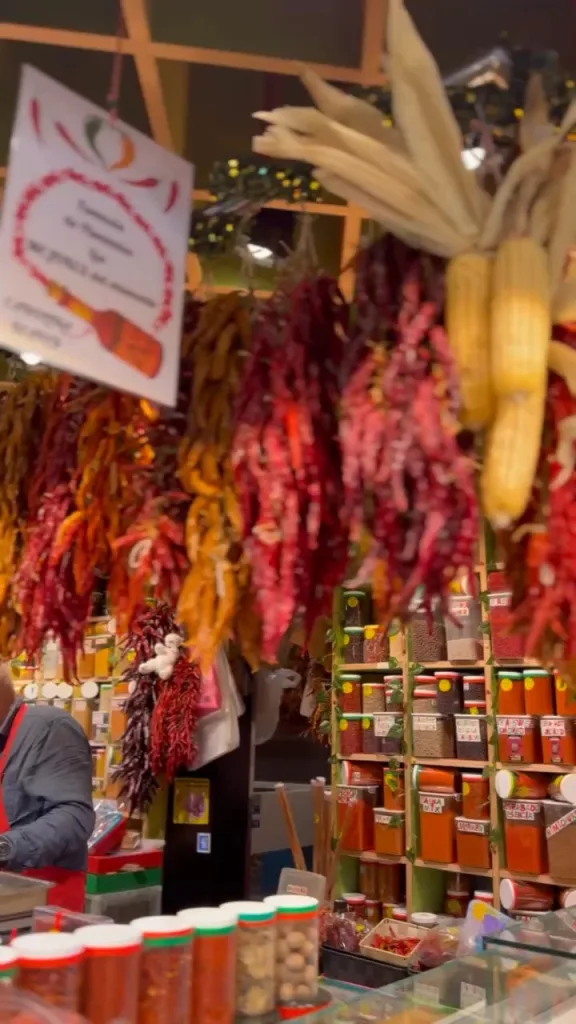
Not what does this taste like, but what could this become? The saffron carries an earthiness that’s almost mineral, floral at the top, ancient underneath — grown on the Castilian plain since before the Moors brought it across the strait a thousand years ago. The paprika is smoke and sweetness and the specific savory depth that makes Spanish cooking taste like nowhere else on earth. The oranges are acidity and brightness — the thing that opens a flavor up rather than closes it down. The rice is the architecture that holds everything together.
I walked out knowing what I wanted the beer to be. We just needed Garage Beer Co. to help us design it.
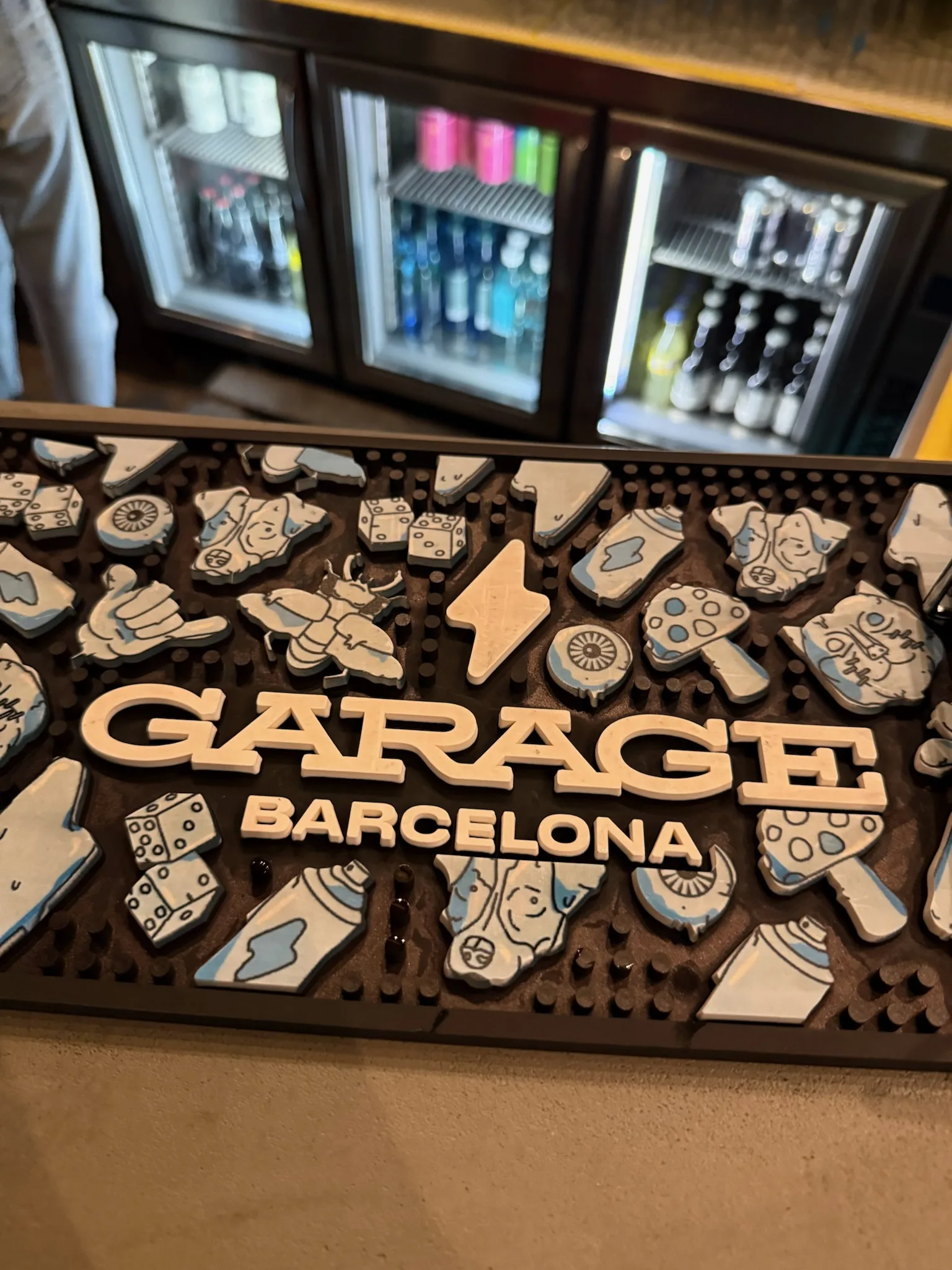
Garage is arguably the first brewery in Catalonia to earn a genuinely international reputation for its IPAs and Sours. James Welsh — whose brewing instincts were shaped in part by Steve Huxley himself, the same man who first brought craft beer to this city — and Alberto Zamborlin, an Italian who arrived here by way of Ireland, met at a homebrew club in 2013 and decided that Barcelona deserved something better than what was available.
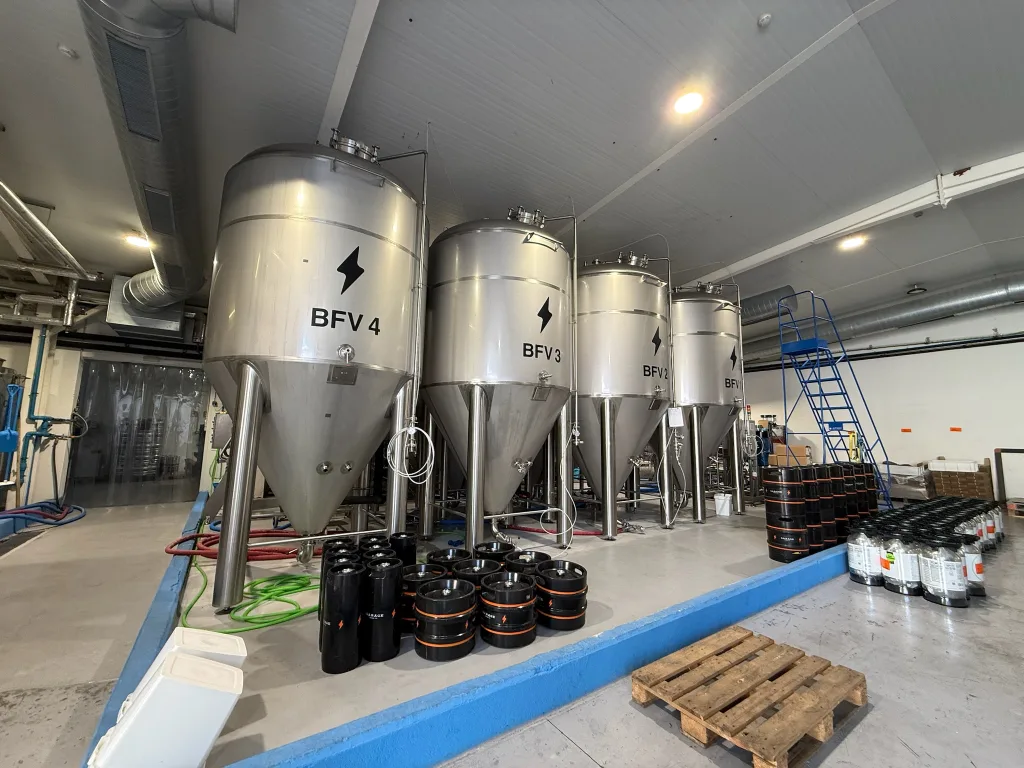
They started with nothing — no investors, no safety net, just two people willing to do every job themselves. When the time came to grow, they didn’t go to banks. They went to their customers. A Crowdcube campaign raised €500,000 — the largest crowdfunding raise in Spanish brewing history, funded by 228 people, ninety percent of whom put in less than a thousand euros each. The community built the brewery. That detail matters more than it might seem.
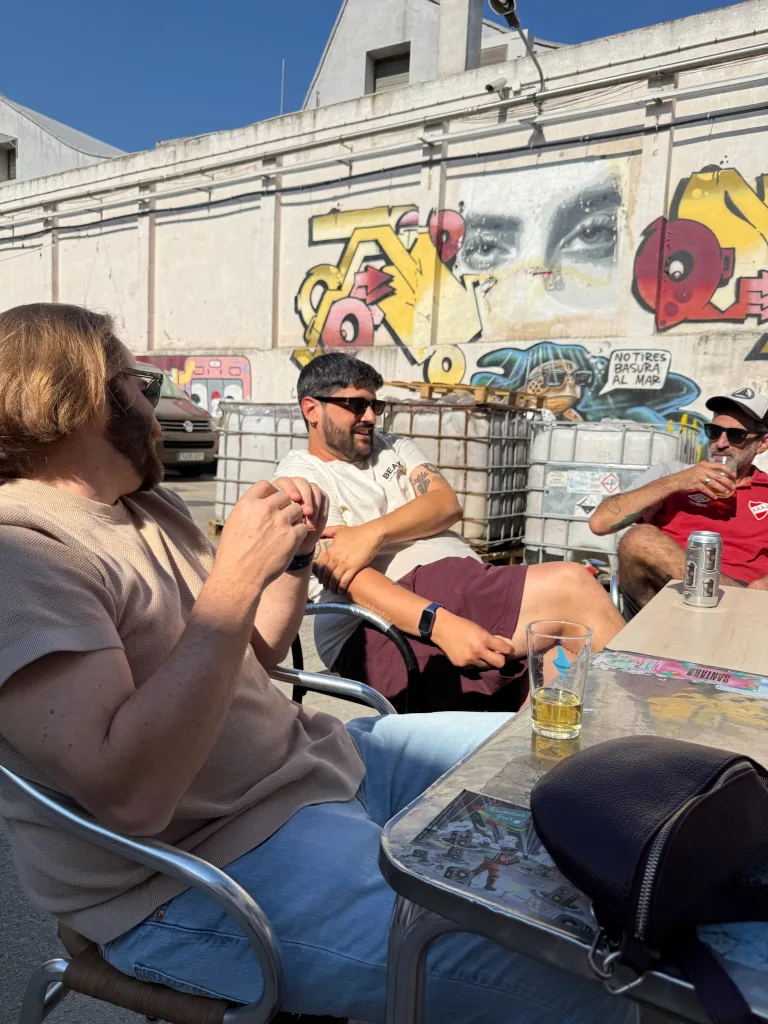
Dan Ashley runs the brewing side of this operation. Head brewer. The kind of professional who makes the gap between concept and execution disappear — who understands that the creative part of making beer is maybe ten percent of the job, and who executes the other ninety with a consistency that allows the ten percent to shine. We spent hours talking about what it means to let a place speak through its ingredients, about the specific gravity of a food culture this old and this confident, about what happens when you take all of that seriously and let it drive the recipe.
My kids were in the brewery while we talked — winding through the tanks and the pallets, completely at ease in the way they always are in these spaces. A brewery is not an unfamiliar environment to a child raised in one. Dan and his team absorbed their presence without a moment’s interruption. That kind of equanimity tells you a lot about the temperature of a place.
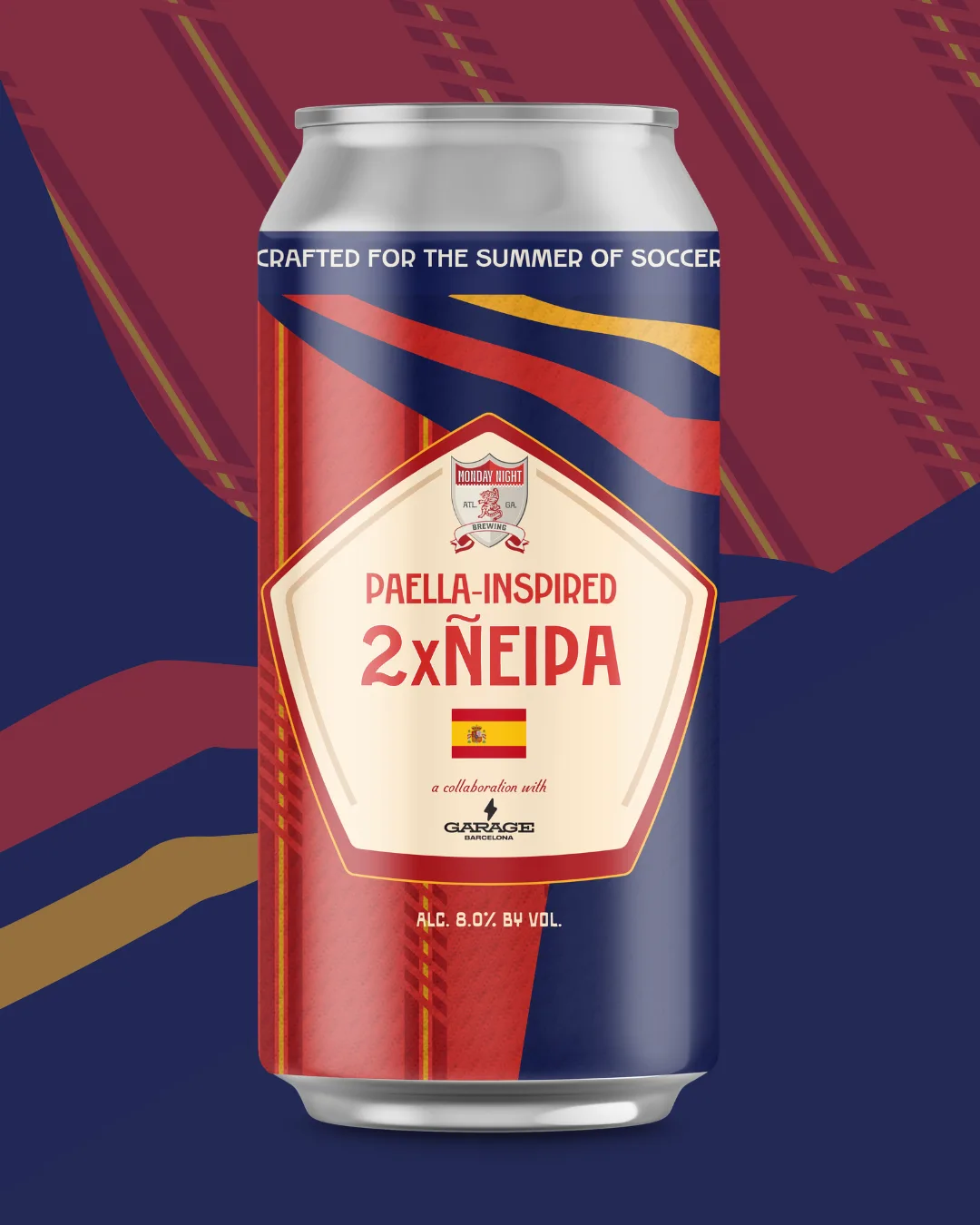
The beer we dreamt up together is a paella-inspired New England Double IPA — or, as we’ve taken to calling it, a 2xÑEIPA. Spanish saffron. Spanish paprika. Rice. Spanish orange juice. And Anchovy hops — yes, that’s a real varietal, look it up. Named after a pizza topping by the Seattle brewers who first got their hands on it, it tastes like the opposite of its name: watermelon candy, raspberry brightness, a clean pine note underneath. Aggressively tropical. Technically speaking, exactly the right hop for this style. And the fact that an ingredient named for a Mediterranean staple ended up in a beer built around one of the great Mediterranean dishes is the kind of cosmic joke that makes you trust the process a little more.
Every ingredient except the hop was sitting on a stall at La Boqueria the morning before we designed this beer.
Laid over a hazy, tropical NEIPA base — soft at first, then something older and more specific emerging from underneath. The flavor of a place. The memory of a long meal at a table in a city that has never once been in a hurry.
That’s Spain in a glass. That’s what lands in Atlanta when Spain takes the pitch at Mercedes-Benz Stadium.
Come find us. Grab a beer. The world is almost here.
Peter B. Kiley